
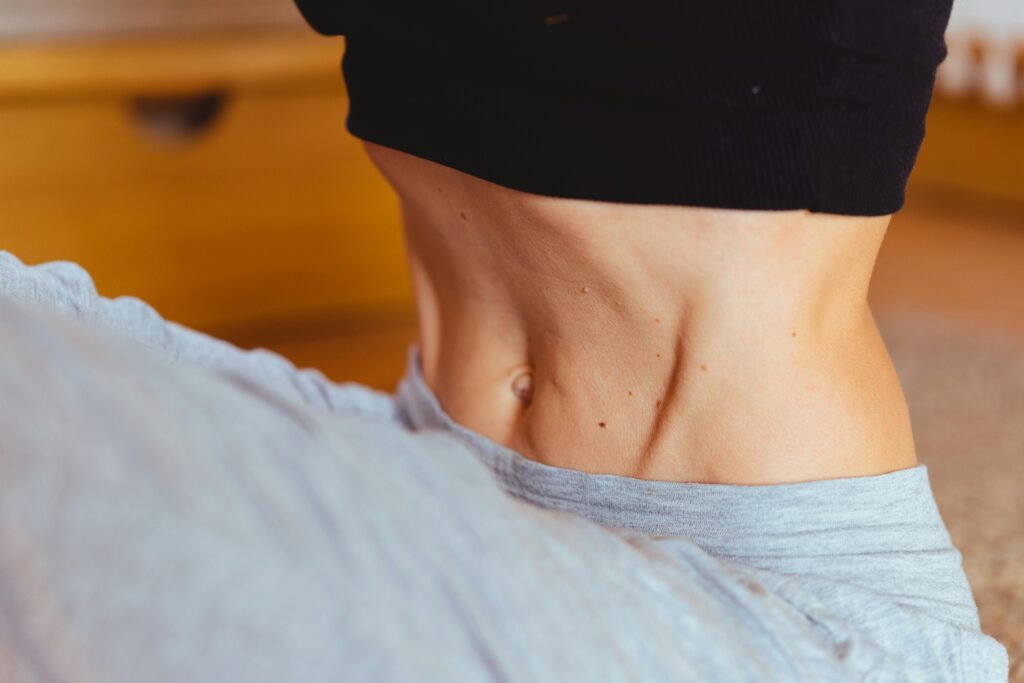
After pregnancy, the focus is often on losing the baby weight. But for many women, there is a deeper, structural challenge that needs addressing first: Diastasis Recti Abdominis (DRA).
If you feel like your core isn’t quite there, or you’ve noticed a bulging or doming in your midsection when you sit up, you aren’t alone. Understanding the science of your core is the first step toward reclaiming your strength and preventing long-term injury.
What is Diastasis Recti?
During pregnancy, your body performs a miracle of expansion. To make room for a growing baby, the two large parallel bands of muscles that meet in the middle of your abdomen, the rectus abdominis, stretch and thin.
The tissue connecting these muscles is called the linea alba. Under the pressure of pregnancy and the influence of the hormone relaxin, this connective tissue softens and widens.
Diastasis Recti occurs when this gap remains too wide (typically more than two finger-widths) postpartum, and the linea alba loses its tension. It isn’t just a cosmetic concern; it is a functional one. Your core is your centre of gravity; when it is compromised, your back, hips, and pelvic floor have to pick up the slack.
REMEMBER: Only a doctor or midwife can sign you off to exercise again after pregnancy
Why Core Rehab is Non-Negotiable
Building your core after pregnancy isn’t about getting six-pack abs. It’s about restoring intra-abdominal pressure.
Without a functional core, you are at a higher risk for:
Chronic Lower Back Pain: Your spine loses its primary support system.
Pelvic Floor Dysfunction: The core and pelvic floor work together. If one is weak, the other often follows, leading to leaks or pressure.
Hernias: Reduced support for your internal organs can lead to umbilical or ventral hernias.
The “Do Not” List: Stop Doing Crunches!
One of the biggest mistakes women make is jumping straight into traditional ab exercises.
Stop! Crunches, sit-ups, and full planks create high internal pressure that can actually push the “gap” further apart or cause the linea alba to bulge (doming).
3 Essential Exercises for DRA Recovery
The goal is to move from the inside out, starting with the Transverse Abdominis (TVA), your body’s natural internal corset.
1. Diaphragmatic “360” Breathing

This is the foundation of all rehab.
How: Sit tall or lie on your back. Place your hands on your lower ribs. Inhale through your nose, feeling your ribs expand sideways and into your back (not just your belly).
The Move: As you exhale through pursed lips, imagine pulling your hip bones toward each other and gently lifting your pelvic floor.
Why: This re-establishes the connection between your breath and your deep core.
2. Dead Bug

How: Lie on your back with your legs in a tabletop position (knees bent at 90 degrees). Press your lower back gently into the floor.
The Move: Slowly lower one heel toward the floor while maintaining total stillness in your spine. If you see doming in your stomach, don’t go as low.
Why: It teaches your core to stabilise your spine while your limbs are moving, essential for everyday life.
3. Modified Side Plank

How: Prop yourself up on your forearm with your knees bent and stacked.
The Move: Lift your hips so your body forms a straight line from head to knees. Hold for 20-30 seconds while focusing on that “360 breath.”
Why: Side planks engage the obliques and the TVA without the intense downward pressure of a traditional front plank.
A Note from Gemma
Healing a diastasis takes patience and consistency. It is about tension, not just the gap. You can have a small gap and a very strong, functional core, or a closed gap with very little stability.
If you are unsure where to start or if you are experiencing pain, a professional assessment is key. We don’t just want to close the gap; we want to build a foundation that supports you for the rest of your life.