
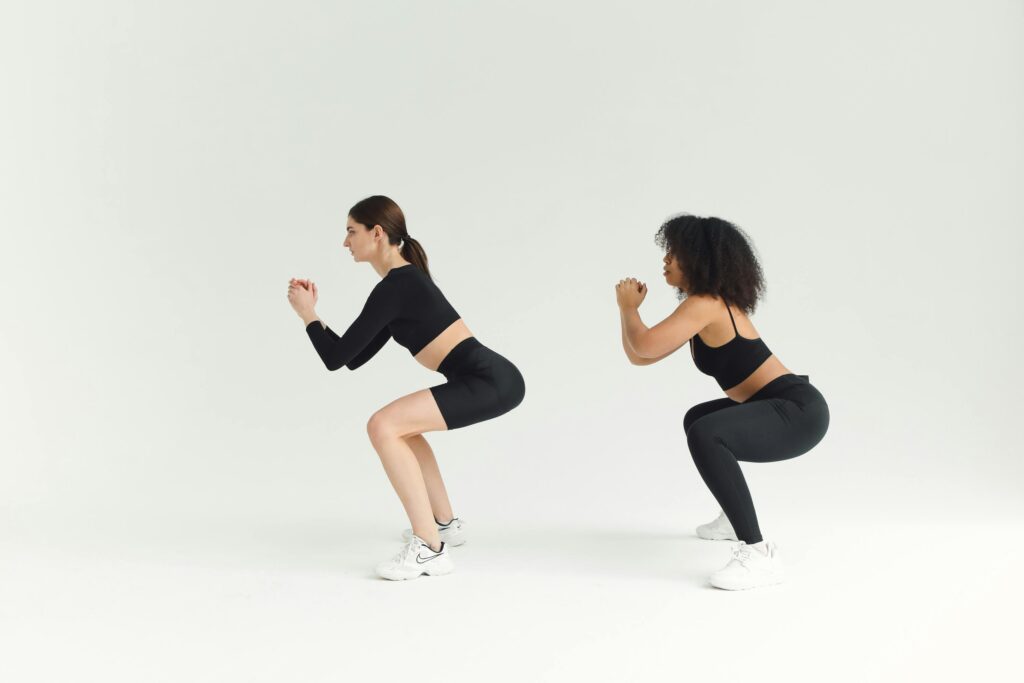
Let’s be honest: in the fitness world, squats usually get all the glory for aesthetic reasons. But as a personal trainer and rehab specialist, I’m here to tell you that the power of the squat goes far deeper than a pair of leggings.
Whether you are chasing a PB (personal best) in the gym or just want to be able to pick up your toddler, or your groceries, without a twinge in your lower back, the squat is the undisputed queen of functional movement.
The Science: What’s Actually Happening?
The squat is a compound, multi-joint movement. This means you aren’t just working your glutes; you are recruiting a massive chain of muscles:
The Posterior Chain: Glutes (the largest, but laziest muscle here), hamstrings, and calves.
The Anterior Chain: Your quadriceps (the powerhouse of the leg).
The Core: Your abdominals and erector spinae (lower back) act as a stabiliser to keep you upright.
The Metabolic Edge: Because squats use some of the largest muscle groups in the body, they trigger a significant hormonal response. They are “metabolically expensive,” meaning they burn more calories and stimulate more muscle growth than isolated exercises like leg extensions.
Why Women Need Squats
For women, squats provide specific health benefits that go beyond the mirror:
Bone Density: Squats are a weight-bearing exercise. By putting healthy stress on your femur and hips, you’re telling your body to pack in more minerals, which is crucial for preventing osteoporosis later in life.
Pelvic Floor Health: Done with proper breathwork (exhaling on the way up), squats help coordinate the pelvic floor with the diaphragm, improving core stability. Great for pre and postnatal exercise too!
Hormonal Balance: Heavy compound lifting helps regulate insulin sensitivity and supports healthy testosterone-to-estrogen ratios as we age.
It’s For Everyday Life
Think about your day. How many times do you sit down and stand up? That is a squat.
Getting out of a car? Unilateral Squat.
Sitting on a low sofa? Box Squat.
Lifting a heavy box from the floor? Goblet Squat.
When we lose the ability to squat, we lose our independence. Training the squat ensures that your “functional floor” stays high as you get older.
3 Pro-Tips for the Perfect Squat

The Foot Anchor: Imagine your feet are tripods. Press your big toe, pinky toe, and heel firmly into the ground. Don’t let your arches collapse.
Hips First: Initiate the move by unhinging at the hips, like you’re searching for a chair behind you.
The “Can of Soda” Core: Imagine your torso is an unopened can of soda. You want internal pressure (a deep breath into the belly) to keep the “can” from buckling under weight.
Bored of Basic Squats? Try These Variations:
If you’ve mastered the standard air squat, it’s time to challenge your stability and rehab those nagging imbalances.
1. The Bulgarian Split Squat
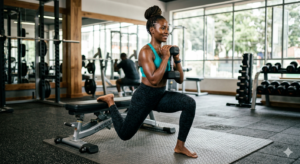
How: Stand a couple of feet in front of a bench. Place one foot behind you on the bench. Lower your hips until your front thigh is parallel to the ground.
Why: This is the king of single-leg strength. It fixes imbalances between your left and right legs and is incredible for hip stability.
2. The Goblet Squat
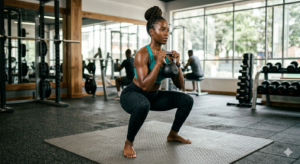
How: Hold a kettlebell or dumbbell against your chest like a “goblet.” Keep your elbows inside your knees as you squat.
Why: The front-loaded weight acts as a counter-balance, allowing you to sit deeper while keeping your spine perfectly upright.
3. The Cossack Squat
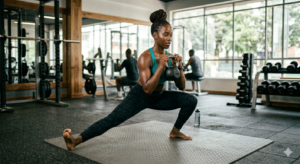
How: Stand with a very wide stance. Shift your weight to one side, squatting deep on one leg while the other leg remains straight with the toe pointing up. Move to the other leg across a squat form.
Why: This builds lateral strength and opens up the adductors (inner thighs), areas often neglected in traditional training.
4. Single Arm Kettlebell Rack Squat
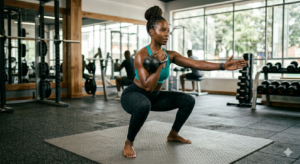
- How: Start by cleaning one kettlebell into the rack position. Place your feet hip-to-shoulder-width apart, mirroring the standard squat stance. Keep the non-loaded arm free for balance and squat as normal.
- Why: Because the weight is held only on one side of the body, it creates lateral (sideways) and rotational force that tries to pull you off balance. To stay upright, your deep core muscles (specifically your obliques and transverse abdominis) must fire automatically and intensely. It is anti-rotation training at its finest.
Ready to level up your training?
If you’re recovering from an injury or want to build a foundation of strength that lasts a lifetime, I’m here to help. Get in touch at [email protected]