

Women don’t tend to have the upper body strength of men. In fact, a study reported that males’ upper body strength is greater than females’ by 157% relative to total body mass.
So why did I always push (no pun intended) push-ups on all my clients?
Well, push-ups have been a fitness staple for decades. They have been featured in military training and elite athlete routines, helping to showcase someone’s elite fitness. But with all the flashy equipment and high-tech workouts available today, the humble push-up begs the question: Are they still the ultimate exercise?
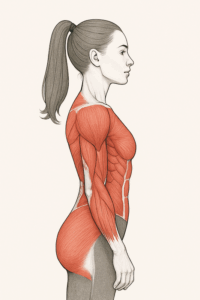
What muscles are used in push-ups?
The push-up’s power lies in its simplicity. It’s a compound bodyweight movement that engages multiple muscle groups at once.
👉 chest (Pectorals):
👉 shoulders (Deltoids):
👉 triceps:
Located on the back of your upper arms, your triceps kick in to extend your elbows during the push phase, helping tone and strengthen the arms. Try narrow ones for a real tricep burn!
👉 core (Abs & Obliques):
👉 and even the glutes
Your glutes help stabilise your hips and maintain alignment. Engaging them during push-ups also supports proper form and protects your lower back.
Efficient exercise
Push-ups are not only efficient but highly functional, mimicking the kind of real-world strength we use daily. And a bonus….no gym and no gear needed (yes, put away that ‘multifunctional’ push-up board and get on the floor!).
What sets push-ups apart is their scalability. Beginners can start on their knees or against a wall or use a chair/sofa, while advanced athletes can progress to one-arm, one-leg or weighted variations. This adaptability makes them accessible to virtually anyone, regardless of fitness level.
What else can push ups do?
Push-ups also build more than just strength. They improve posture, support joint stability, and even enhance cardiovascular endurance when performed in high-rep sets or circuits. From a time-efficiency standpoint, few exercises offer as much bang for your buck.
How to do a Basic Push-up
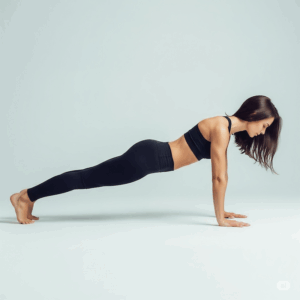
👉 1. Start in a High Plank Position
Place your hands slightly wider than shoulder-width apart on the floor. Keep your legs straight and feet hip-width apart. Your body should form a straight line from head to heels. Engage your core and glutes.
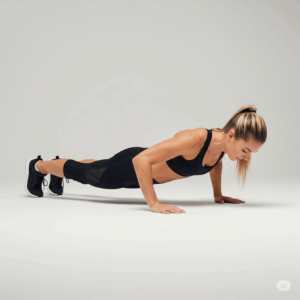
👉 2. Lower Down With Control
Inhale as you bend your elbows and slowly lower your chest toward the floor. Keep your elbows at about a 45-degree angle from your body (not flared out wide). Don’t let your hips sag or your back arch and stay in that strong plank position.
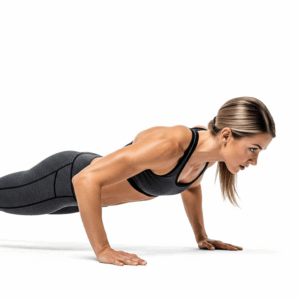
👉 3. Press Back Up
Exhale as you push through your palms to straighten your arms and return to the starting position. Maintain that tight core and glute engagement throughout the movement.
Push-Up Variations to Try
Once you’ve nailed the basic push-up, you can start to mix things up to challenge different muscles, increase difficulty, or target specific goals. Here are 5 variations to add to your routine:
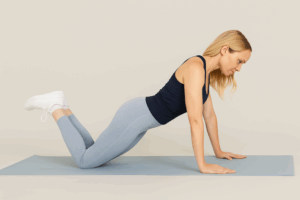
👉 1. Knee Push-Up
Perfect for beginners, this variation reduces the load by keeping your knees on the ground helping you build strength and master form before progressing.
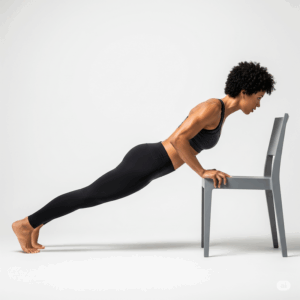
👉 2. Incline Push-Up
Place your hands on a bench, chair, or sofa. This shifts weight away from your upper body while still engaging the core and chest. Great for easing in or adding reps.
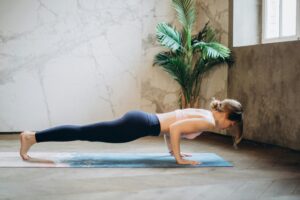
👉 3. Triceps Push-Up
Place your hands close together under your chest and elbows in. This puts major emphasis on your triceps and inner chest.
👉 4. Dumbbell Push-Up
Place you hands on two dumbbells (flat-edged handles to begin with and move to round ones as you get stronger) and push off them for added shoulder stability strength. Keep your body in the plank position for building core stability and for an added core challenge turn to a side plank position at the top of the push-up with one hand on the dumbbell.

👉 5. Spiderman Push-Up
As you lower into a push-up, bring one knee toward the elbow on the same side. This adds a core challenge and improves mobility—great for functional fitness fans.
Final thoughts
All this said, no single movement can truly claim the crown as the ultimate exercise for everyone and sorry, it won’t help you shift that weight alone. Variety is key in a balanced fitness and diet regimen, especially if you want to avoid injury. But if you’re looking for a proven, low-barrier, full-body move that delivers serious results? Push-ups are a very strong contender.
Verdict: Maybe not the only exercise you need—but definitely one you shouldn’t skip.