

We walk every day, but are we doing it right? Learning how to walk properly is one of the simplest and most effective ways to improve your overall health, posture, and strength. It was where I started with all my clients. I would tell them one of the easiest ways to start burning calories and getting more movement into your life is walking correctly…using the right leg muscles, as they are the biggest in the body!
Walking with correct form can reduce joint pain, prevent injury, and activate muscles you may not even realise you’re neglecting. Have you ever experienced sciatica? Well, it is most likely that you are not engaging the right glute muscles.
It also supports long-term mobility, balance, and core stability, especially important as we age.
According to a 2022 study, walking 10,000 steps per day is linked to a 35% lower risk of death from any cause. And while step count matters, walking technique is just as critical. Poor walking mechanics can cause strain on your hips, knees, and lower back.
In 2019 a study also showed that women who took more steps had a better quality of sleep.
With hormonal fluctuations throughout women’s lives, which affect many of our day-to-day activities, it seems walking could be a great, easy and cheap solution.
That’s why I created a quick tutorial on YouTube showing the right way to walk. Below, I break it down step by step.
Step-by-Step: How to Walk with Proper Form
1. Heel-to-Toe Strike for Muscle Activation

Start your step by striking the ground with your heel, then roll through the foot and push off with your toes. This engages your tibialis anterior, soleus, and gastrocnemius muscles, which stabilise the ankle and absorb impact efficiently. You should feel your weight roll through the entire foot.
This technique improves balance, reduces injury risk, and builds ankle strength, including your arches…so if you have a flat foot, this can help lift your arches.
2. Engage Your Glutes
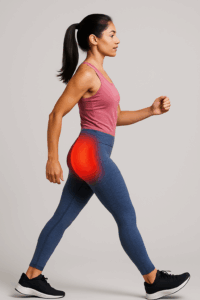
The glute muscles are the largest and most powerful extensor muscles in your body. When you don’t actively use them during walking, you rely too much on your lower back and hamstrings, leading to pain, poor posture, and even nerve impingement. I tell all my clients, your glutes are the laziest muscle in the body, yet the strongest extensor muscle, so you have to actively think about them to engage them.
With each step, squeeze your glutes to push off and propel yourself forward. You should feel as though you are moving directly forward, with some power. This builds strength, stability, and power.
3. Keep Your Hips Level and Core Tight
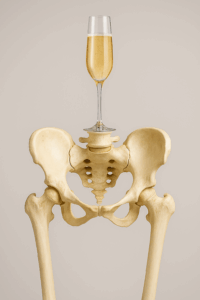
Avoid swaying side to side. Instead, imagine balancing a tray of expensive champagne on your hips that you don’t want to spill! Engage your core (pull in your middle as if you have a c,orset tightening all around your midriff) and keep your pelvis stable and level.
This protects your lower back and promotes alignment. You should feel as if nothing in your body is moving, apart from going forward. Good core control helps you move efficiently and with less strain on your joints.
4. Posture and Upper Body

Picture a string pulling you up from your chest and the top of your head. Walk upright, with shoulders relaxed and arms swinging naturally. This elongates the spine and reduces excess movement. You should feel as if your breathing is going up and down, rather than forward and back, and your upper back muscles engage to stop your shoulders from hunching forward.
When the upper body is aligned, your energy goes into forward momentum, not unnecessary motion.
Why Walking With Proper Form Matters
Walking isn’t just exercise; it’s the foundation of all movement. Whether you’re working on posture, core strength, running form, or joint health, everything starts with how you walk.
Incorrect walking habits can lead to:
Hip and lower back pain
Knee strain and poor alignment
Glute inactivation (a major cause of injury and imbalance)
Fatigue from inefficient movement
By focusing on proper walking mechanics, you can retrain your body, burn more calories (helping with weight loss), strengthen underused muscles, focus your mind (improving your mood and concentration) and improve your overall quality of movement.
I have seen vast improvements in my posture and fewer aches and pains since doing this. After my c-section I felt, like many women, hunched over as I was in this position for a few weeks. This mindful, slow walking helped strengthen my core and get back to my correct posture.
Try Mindful Walking

Walking is also a chance to be present in your body. So the next time you’re walking the dog, taking out the rubbish, heading to school with the kids, or stepping out at lunchtime…leave the headphones behind. Walk mindfully. Feel each muscle engage. Breathe deeply. Align your posture.
Start with just 10 minutes of mindful walking per day and feel the difference it makes in your strength, mobility, and mood.
Want to See It in Action?
👉 Watch my YouTube tutorial on how to walk properly and start building strong, efficient movement today.