
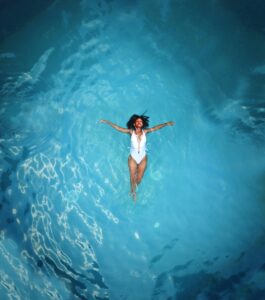
Overcoming My Fear of Swimming
I used to hate swimming, in fact, I was scared of water if I couldn’t touch the bottom. Going snorkelling, even though I could see the bottom, I couldn’t relax and enjoy it if I couldn’t touch it. Like most people in the UK, I learned to swim in cold outdoor pools or a leisure centre, where if you couldn’t keep up with the teacher, you were left behind in the baby pool…not great for learning or your ego!
That changed when I moved into a building with a pool. I decided not to waste the opportunity and began teaching myself how to swim by watching YouTube swimming tutorials like this one. What started as fear turned into confidence, and now swimming is one of my favourite workouts.
The Benefits of Swimming for Health and Fitness- with science to back it
Swimming is one of the best full-body workouts you can do. It builds strength, improves cardiovascular endurance, and is gentle on the joints. For women, swimming is especially powerful during perimenopause when in cold water, helping regulate mood, bone health, and energy levels. It’s also recommended during pregnancy, keeping the body active without stress, and for injury rehabilitation, because the water supports recovery while maintaining mobility.
How to Do Breaststroke (Beginner-Friendly)
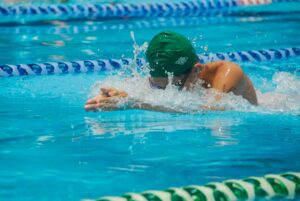
The first swimming stroke I learned was breaststroke, perfect for beginners.
- Start by extending your arms forward, then sweep them in a circular motion back towards your shoulders.
- Scoop your hands and stretch them back out in front.
- As you are scooping your hands, move your legs into a frog-like kick.
- Finish with a glide before repeating.
Breaststroke is calm, controlled, and helps you build confidence as you get comfortable in the water.
Start with one lap at a time with 15-20 seconds rest and build to 10 laps. Once you can do this, you can start doing laps without rest and build up the number of laps. It should feel like an easy job (although swimming is harder than running, so don’t get disheartened if you feel out of breath for a while).
Once you feel comfortable with this you can add your face in the water as you extend your arms out front and pull it out as your arms scoop back for breath. This extends your stroke.
How to Do Freestyle (Front Crawl)
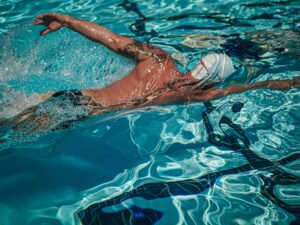
Next, I mastered the freestyle stroke (front crawl). It’s faster and a great cardio workout.
- Stretch one arm forward as the other pulls back through the water.
- Try and roll on the side of the arm out in front for an extended reach.
- Maintain a steady flutter kick with your legs.
- Breathing is the hardest part at first…turn your head to the side (and your slightly) breathe in. Breathe out in the water.
With practice, freestyle feels smooth and powerful, making it a go-to stroke for fitness swimmers. Your heart rate will be much higher tha other strokes so it feels like a harder run.
How to Do Backstroke (Confidence Booster)
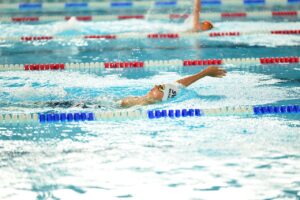
The backstroke is a relaxing stroke and perfect for building stamina.
- Float on your back, keep your body straight.
- Kick gently.
- Alternate your arms in a windmill-like motion.
Because your face stays above water, it’s excellent for beginners who want to feel more confident. You can try this without arms or stretch arms out and clasp your hands and just use your legs for an added workout.
Swimming Drills for Beginners and Fitness
If you want to improve your technique and build endurance, try these beginner-friendly swimming drills:
Swim 10 lengths freestyle.
Swim 5 lengths using only your legs (with a kickboard if available).
Swim 5 lengths using only your arms.
Swim another 5 lengths freestyle.
Finish with 5 lengths backstroke using just your legs.
These drills improve coordination, strength, and stamina while keeping your workouts fun and challenging.
Final Thoughts
Learning to swim as an adult is possible, and it’s life-changing. Swimming isn’t just a workout; it’s therapy, stress relief, and a skill that builds confidence in and out of the pool. Whether you’re in perimenopause, recovering from an injury, or just looking for a low-impact, full-body exercise, swimming is one of the best ways to take care of your body.
I have added a few videos of me doing these strokes to get more of an idea.