
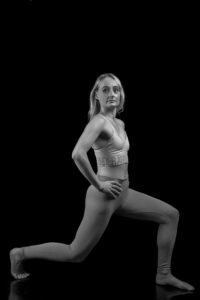
Lunges…What Are They Good For?
Lunges are one of the best bodyweight exercises for building strong legs, glutes, and core stability. They strengthen your quadriceps, hamstrings, glutes, calves, and abs, all while improving balance, coordination and joint strength. Because they work one leg at a time, lunges also help correct muscle imbalances and boost athletic performance.
But here’s the catch: lunges are considered an advanced move. Yes you heard me right…advanced. So don’t beat yourself up if you can’t do one yet.
With my personal training clients, I start at the beginning, and we work our way to Lunge heaven! Follow these simple steps and you too can be lunging your way to a healthy life (and balancing in those heels!).
1. Static Lunge (Beginner-Friendly Foundation)
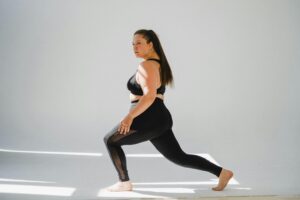
If you’re a beginner, start slow and hold onto a wall, chair, or stability ball for balance. Once you’ve built strength and confidence, you can explore the other lunge variations to level up your workout.
The basic lunge:
Step one foot back, lower both knees to 90 degrees, keeping your front knee over your ankle.
Keep your core pulled tight, pelvis tucked and chest up (like a string is pulling you up through the top of your head).
Push through your front heel to stand tall.
2. Forward & Bacward Lunge (Builds Strength + Endurance)
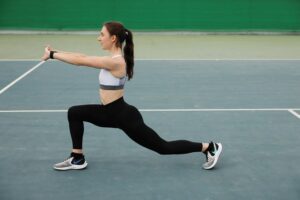
Once you have balance and stability, you can move into the forward and backwards lunges. These add momentum and power as they mean you have to power back to the start position from one leg. The backwards lunges are great for what we call proprioception (awareness of the position and movement of the body without looking at it).
Directions:
Step forward into a lunge, then push off your front leg to return to the start.
Alternate legs in a smooth, walking motion.
- For backwards lunges, step back, bend into a lunge and return to the start
3. Lunges With a Step (Increase Range of Motion)
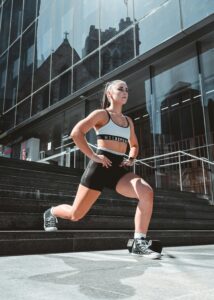
If you want to increase your flexibility and strength in a deeper range of motion, then adding a step can help.
Front foot on step: Increases intensity by lunging deeper.
Back foot on step (Bulgarian split squat): Advanced move for balance and power.
You can add weights or just use bodyweight to get a good burn on those quads!
4. Weighted Lunges with Upper Body Moves
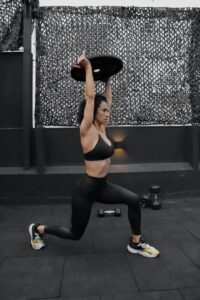
A good trick of mine for clients who said they didn’t like/want to do upper body, was to add in a few sneaky moves as they did lunges. The added movement is great for your core and mental concentratio0n.
Hold dumbbells by your sides for resistance.
Add a bicep curl as you lunge down or a shoulder press as you rise.
5. Core-Engaging Lunge with Twist

To add more core into your lunges as well as strengthening your joints (and challenge that balance), you can add a twist with a weight out in front of you.
Hold a dumbbell or medicine ball at chest level.
As you lunge, rotate your torso over the front leg.
6. Curtsy Lunge (Outer Thighs + Glutes)

A great favourite of mine, that helps work the inner and outer thighs (and feels more stable than tradiationl side lunges), is the curtsy lunge.
Step one leg diagonally behind and across the other.
Lower into a “curtsy” position and return to standing.
How Many Lunges Should You Do?
Another question is how many and when to progress. I suggest starting with 2–3 sets of 10–12 reps per leg. Once you can do this you can add weights and/or move to the next stage. Remeber – Always prioritise form over speed.
Progress gradually by adding weights or trying advanced variations.
Final Thoughts
Lunges are one of the most versatile and effective leg exercises you can do anywhere, no equipment required. With practice, they’ll build strength, stability, and confidence while shaping leaner, stronger legs.
Whether you’re new to fitness or looking to push your limits, try these lunge variations and see how they transform your workouts.
The full video I did is available below: