
10 best Supplements that can support perimenopause symptoms
After having my baby last year, I started noticing things were different when it came to my body. I was having a lot of ‘foggy-headedness’ (my new word!), irregular periods, and not sleeping as well. Most would put this down to new mum syndrome, but I knew this was different, and at 41 , after listening to this amazing podcast, I knew it could also be perimenopause symptoms. Now i wnat to share the 10 best supplements for perimenopause 2025
Table of Contents
ToggleWhat is Perimenopause
Perimenopause is the transitional phase leading up to menopause, when a woman’s body begins to shift toward the end of the reproductive years…sort of the reversal of puberty. Most women ar unaware, as I was, that this stage can start in the late 30s or 40s and lasts until menopause (when your period has stopped for over a year).
During perimenopause, hormone level, especially estrogen and progesterone, fluctuate, causing a range of physical and emotional symptoms such as irregular periods, hot flashes, sleep disturbances, mood swings, and changes in libido. While it’s a natural part of ageing, understanding perimenopause can help women better manage symptoms and maintain their overall well-being during this important life transition.
Managing Symptoms Without Drugs
There are things your doctor can prescribe for your symptoms, which I write about later, but there are also a few more natural alternatives you can try.
Firstly, let’s undersstand the differences between vitamins, vitamin supplements and herbal supplements.
- Vitamins are organic nutrients that your body needs in small amounts to function properly. They’re naturally found in foods, like vitamin C in oranges, and help with everything from boosting immunity to supporting bone health.
- Vitamin supplements are products designed to provide these essential nutrients in concentrated forms, such as pills, tablets, or powders. They’re especially useful when your diet doesn’t provide enough of a particular vitamin, when your body may need extra support.
- Herbal supplements are made from plants and used for their medicinal properties. Instead of delivering nutrients your body needs daily, herbal supplements, like black cohosh, maca root, or red clover, are often taken to help with specific symptoms or health conditions, such as hormonal balance or stress relief.
Simply put, vitamins are nutrients; vitamin supplements help you get more of them, and herbal supplements use natural plant compounds to support overall health or manage symptoms.
Now let’s see what there is, the science behind it and where we can get reasonably priced ones!
1. Black Cohosh

- What is it?: Black cohosh, also known as bugbane or black snakeroot, is a perennial plant native to North America. The root is commonly used to make herbal preparations.
Why it’s beneficial: Black Cohosh is commonly used to reduce hot flashes and night sweats associated with perimenopause. It contains phytoestrogens that may help balance hormone levels.
Is there any evidence?: A 2015 study found that out of 42 women who completed a trial of black cohosh (compared to the group that took a placebo) showed clear improvements in their sleep. They slept more efficiently and spent less time awake during the night after falling asleep. Overall, the time spent awake after falling asleep went down by about 15.8% in the black cohosh group. Their sleep quality also improved moderately. When choosing a black cohosh supplement, look for ones made from the root or underground stem (rhizome) of the Actaea racemosa plant, also called black cohosh or black bugbane. It’s also good to choose supplements that mention being “standardised for triterpene glycosides”—these are the natural compounds believed to help with symptoms.
UK Retailer: Boots has 30 for £10.30
Online Retailer: Amazon had 120 for $19.97
2. Evening Primrose Oil
- What is it?: Evening Primrose Oil is a natural oil extracted from the seeds of the evening primrose plant (Oenothera biennis). It’s rich in gamma-linolenic acid (GLA), an omega-6 fatty acid that the body uses to make hormone-like substances called prostaglandins, which help regulate inflammation and other functions.
Why it’s beneficial: Rich in gamma-linolenic acid (GLA), Evening Primrose Oil may help alleviate mood swings, breast tenderness, and skin issues during perimenopause.
- Is there any evidence?:
A study in Iran looked at how evening primrose oil affects hot flashes and night sweats in postmenopausal women. From May 2018 to April 2019, women were split into two groups, one took 1,000 mg of evening primrose oil twice a day for 8 weeks, and the other took a placebo (a pill with no active ingredients). The results showed that evening primrose oil didn’t make a big difference for hot flashes, but it did help reduce how often and how severe night sweats were. This means it may be a helpful option for managing night sweats during menopause. When looking for evening primrose oil, prioritize reputable brands, cold-pressed extraction, and high GLA content per serving.
UK Retailer: Holland and Barrett 60 for £14.99
Online Retailer: Amazon 200 for $39
3. Red Clover

- What is it?: Red clover is a plant with small pink flowers, and it’s often used as a natural remedy for perimenopause and menopause symptoms like hot flashes, night sweats, and mood changes.
Why it’s beneficial: Red Clover contains isoflavones, which are plant-based compounds that mimic estrogen. It may help reduce hot flashes and improve bone health.
- Is there any evidence?: A review looked at several studies on red clover extract (Promensil) to see if it helps with hot flushes in menopausal women. Only five high-quality studies were included, where women took 80mg of the supplement daily. The results showed that red clover significantly reduced the number of hot flushes per day compared to a placebo. On average, women in the treatment group had about 3 fewer hot flushes per day. The supplement also appeared to be safe to use for up to 3 months. When choosing a red clover supplement, focus on the amount of isoflavones, especially Biochanin A and Formononetin. Isoflavones are the active compounds with estrogen-like properties that are thought to provide the benefits.
UK Retailer: Nature’s Herd has 60 for £7.95
Online Retailer: Amazon has 200 for $20.99
4. Dong Quai

- What is it?: Dong quai (pronounced dong kwai) is a traditional Chinese herb, also known as Angelica sinensis. It’s often called the “female ginseng” because it’s commonly used to support women’s health, especially during menstruation, perimenopause, and menopause.
Why it’s beneficial: Dong quai is believed to help balance hormones, reduce menstrual cramps, ease hot flashes and night sweats, and improve mood and energy levels. It has been used for centuries in traditional Chinese medicine as part of herbal formulas that support the uterus and overall reproductive health.
- Is there any evidence?: Unfortunately, not. A study looked at 71 postmenopausal women (average age 52) who were experiencing hot flashes. Half were given dong quai, and the other half took a placebo for 24 weeks. Researchers measured things like changes in the uterus, vaginal cells, and menopause symptoms such as hot flashes and mood changes. The results showed no major differences between the dong quai group and the placebo group. This means dong quai, when used on its own, didn’t help relieve menopause symptoms or act like estrogen in the body.
UK Retailer: Bodykind 60 at £25.50
Online Retailer:Amazon 100 for ¢19.67
5. Maca Root

- What is it?: Maca root is a plant native to the Andes mountains of Peru. It’s grown for its nutritious root, which is dried and used in powders, capsules, or extracts. Maca is sometimes called “Peruvian ginseng”, even though it’s not related to ginseng.
Why it’s beneficial: Maca Root is an adaptogen that may help balance hormones, boost energy, and improve mood and libido during perimenopause.
- Is there any evidence?: A small study tested whether maca root could help reduce menopause symptoms in women who had recently gone through menopause. Over a few months, the women took either a placebo or maca root capsules (2 grams per day). The researchers tracked hormone levels and menopause symptoms like hot flashes, mood changes, and sleep problems. The results showed that after taking maca, women had lower levels of FSH (a hormone that rises after menopause) and higher levels of estrogen and progesterone, which can help balance hormones and ease symptoms. Women also said they felt better overall, though some of that may have been due to the placebo effect. In short, maca root may support hormone balance and reduce menopause discomfort, but more research is needed to confirm its long-term effects. When looking for maca root, consider its colour (yellow, red, black), concentration if buying extract, and whether it’s a single colour or a blend. Reputable brands should offer organic options.
UK Retailer: Vitabright have 180 for £18.99
Online Retailer: Amazon sell 150 for $17.88
6. Vitamin E
- What is it?: Vitamin E is a fat-soluble vitamin that acts as a powerful antioxidant in the body. This means it helps protect cells from damage caused by harmful molecules called free radicals.
Why it’s beneficial: Vitamin E is an antioxidant that may help reduce hot flashes and improve skin health during perimenopause.
- Is there any evidence?: This study looked at whether curcumin (a compound from turmeric) and vitamin E could help reduce hot flashes and anxiety in 93 postmenopausal women. The women were divided into three groups: one took curcumin capsules, another took vitamin E tablets, and the last group took a placebo. They took the supplements twice a day for eight weeks and recorded their hot flashes, anxiety, sexual function, and other symptoms. Results showed that both curcumin and vitamin E helped reduce hot flashes compared to a placebo. Curcumin started working after four weeks, while vitamin E took about eight weeks to show effects. However, neither curcumin nor vitamin E made a significant difference in anxiety, sexual function, or other menopausal symptoms. When choosing a vitamin E supplement, prioritise alpha-tocopherol, the most biologically active and readily absorbed form of vitamin E. Look for products that specify d-alpha-tocopherol for naturally sourced vitamin E, or dl-alpha-tocopherol for synthetic sources.
UK Retailer: Sunday Natural have 60 for £14.90
Online Retailer: Amazon has 100 for $13.57
7. Calcium and Vitamin D
- What is it?: Calcium and Vitamin D are two essential nutrients that work together to keep your bones strong and healthy.
Why it’s beneficial: These nutrients are essential for bone health, which can be compromised during perimenopause due to decreasing estrogen levels.
- Is there any evidence?: This review looked at whether taking vitamin D and calcium helps improve bone health in postmenopausal women being treated for osteoporosis. It analysed data from 37 high-quality studies involving over 43,000 women, most of whom were around 66 years old. The findings showed that vitamin D supplements were linked to fewer stomach problems and a lower risk of death during treatment. However, there wasn’t strong evidence that calcium supplements had any additional benefits on bone strength, fracture rates, or other health markers. In short, vitamin D may be especially helpful for women with osteoporosis after menopause, especially when used alongside other treatments. When choosing a calcium and vitamin D supplement, look for products with a purified source of calcium, like calcium carbonate or citrate and consider a combined supplement if you need both. Avoid unrefined sources like oyster shell, bone meal, or dolomite, which may contain lead.
UK Retailer: Boots has 30 for £1.49
Online Retailer: Amazon has 120 for $9.99
8. Omega-3 Fatty Acids
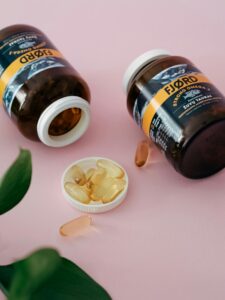
- What is it?: Omega-3 fatty acids are healthy fats that are essential for your body and brain but can’t be made by the body, so you need to get them from food or supplements. There are three main types:
ALA (found in flaxseeds, chia seeds, and walnuts)
EPA and DHA (found mainly in oily fish like salmon, mackerel, and sardines)
Why it’s beneficial: Omega-3s may help reduce inflammation, improve mood, and support heart health during perimenopause.
- Is there any evidence?: A study found that omega-3 fatty acids can help reduce psychological distress and mild depression in women going through menopause or perimenopause. In the study, 120 women aged 40 to 55 were split into two groups. One group took omega-3 capsules containing EPA (a type of omega-3 from fish) every day for eight weeks, while the other group took capsules with sunflower oil (a placebo). After eight weeks, women who took omega-3s showed clear improvements in mood and emotional well-being, especially those with mild symptoms. They also had fewer hot flashes, dropping by an average of 1.6 per day compared to only 0.5 in the placebo group. This effect is similar to results seen with hormone therapy and antidepressants. When choosing an omega-3 supplement, focus on finding one withhigh concentrations of EPA and DHA, the key omega-3 fatty acids, and ensure it’s free of contaminants.
UK Retailer: Boots has 120 for £13
Online Retailer: Amazon has 90 for $31
9. Magnesium
- What is it?: Magnesium is an essential mineral that supports key body functions such as muscle and nerve activity, blood sugar and pressure regulation, bone health, and energy production. It’s vital for overall health and well-being.
Why it’s beneficial: Magnesium may help with sleep disturbances, mood swings, and bone health during perimenopause.
- Is there any evidence?: Two small pilot studies tested magnesium oxide supplements (up to 1200 mg daily) to reduce hot flashes in menopausal women, including those with breast cancer. Results showed that over half of the women experienced a significant reduction in hot flash frequency and severity, with some reporting complete relief. These promising findings led to a larger, controlled trial to confirm magnesium’s effectiveness for managing hot flashes, especially in women who cannot use hormone therapy. When choosing a magnesium supplement, look for magnesium glycinate which is well absorbed by the body and is less likely to cause digestive issues like diarrhea.
UK Retailer: Holland and Barrett have 120 for £11.95
Online Retailer: Amazon have 120 for $18.27
10. B-Complex Vitamins
- What it it?: B complex vitamins are a group of eight essential vitamins that help your body convert food into energy and support important functions like brain health, red blood cell formation, and cell metabolism. They include:
B1 (Thiamine) – supports nerve function and energy metabolism
B2 (Riboflavin) – helps break down fats, drugs, and steroids
B3 (Niacin) – supports skin health, nerves, and digestion
B5 (Pantothenic acid) – helps make hormones and process fats and proteins
B6 (Pyridoxine) – important for brain development and immune function
B7 (Biotin) – supports hair, skin, and nail health
B9 (Folate or folic acid) – helps form DNA and is crucial during pregnancy
B12 (Cobalamin) – needed for nerve function and red blood cell production
Together, they help maintain energy, mental clarity, and overall well-being.
Why it’s beneficial: B vitamins support energy metabolism and may help alleviate fatigue and mood swings associated with perimenopause.
- Is there any evidence?: This review highlights the important role of B vitamins, especially folate, B2, B6, and B12, during menopause. These vitamins are essential for energy metabolism, nervous system function, and one-carbon metabolism, which affects DNA formation and brain health. Deficiencies, often due to poor intake, malabsorption, or medication interactions, are linked to cognitive decline, dementia, cardiovascular disease, and reduced bone density. Studies show that adequate B vitamin levels can reduce the risk of stroke, improve cognitive function, and help maintain bone health. The paper recommends monitoring and supporting B vitamin levels as part of menopause care. When choosing a vitamin B complex supplement, focus on whether it contains all eight essential B vitamins: B1, B2, B3, B5, B6, B7 (biotin), B9 (folate), and B12. Additionally, look for supplements that offer specific forms of vitamins, such as 5-MTHF (the active form of folate).
UK Retailer: Holland and Barrett have 120 for £10.49
Online Retailer: Amazon has 60 for $9.97
Note: It’s important to consult with a healthcare provider before starting any new supplement regimen, especially if you have existing health conditions or are taking other medications.